
%201.svg)

.png)
September 3, 2026
If you think schools need more certainty, this room of 300 educators and non-teaching staff would respectfully disagree.
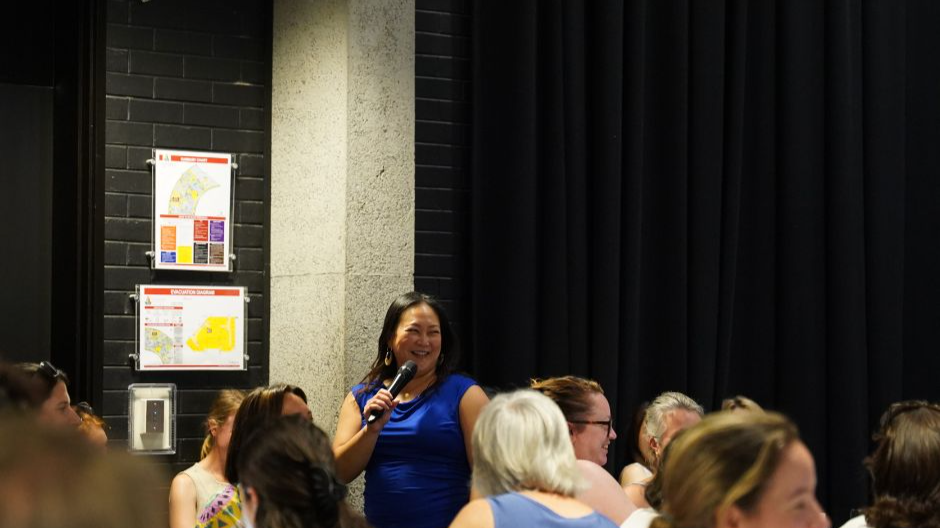
Last week, I had the privilege of kicking off the school year with Firbank Grammar School, delivering a keynote on Curiosity in a Changing World.
As I ran (literally) around the room with a microphone to capture thoughts and ideas (in 43 degree heat, no less ☀️), it was a reminder of why education leadership matters so deeply.
We already know our educators are ambitious and high-performing, and we also know they are at the frontline of a pace of change that now asks something deeper of all of us.
So instead of introducing new tools, reshaping curriculum, or even running AI training, we focused on something more foundational – a shift in mindset.
Asking the exponential questions
Speaking to the theme of curiosity – it was important to distinguish it not as a personality trait that you're either 'born with' or not, but as a capability leaders actively model and protect. It's a capability that can be learned and practiced.
We talked about how AI, tech, geo-politics, and shifting social trends are reshaping work and learning, and why leadership today is less about having the answers and more about creating the conditions for better questions.
This sits at the heart of Exponential Intelligence (eXQ) – the ability to keep learning, adapting, and growing as the world accelerates. In an exponential environment, curiosity is one of the key traits that activates the other 29 eXQ capabilities.
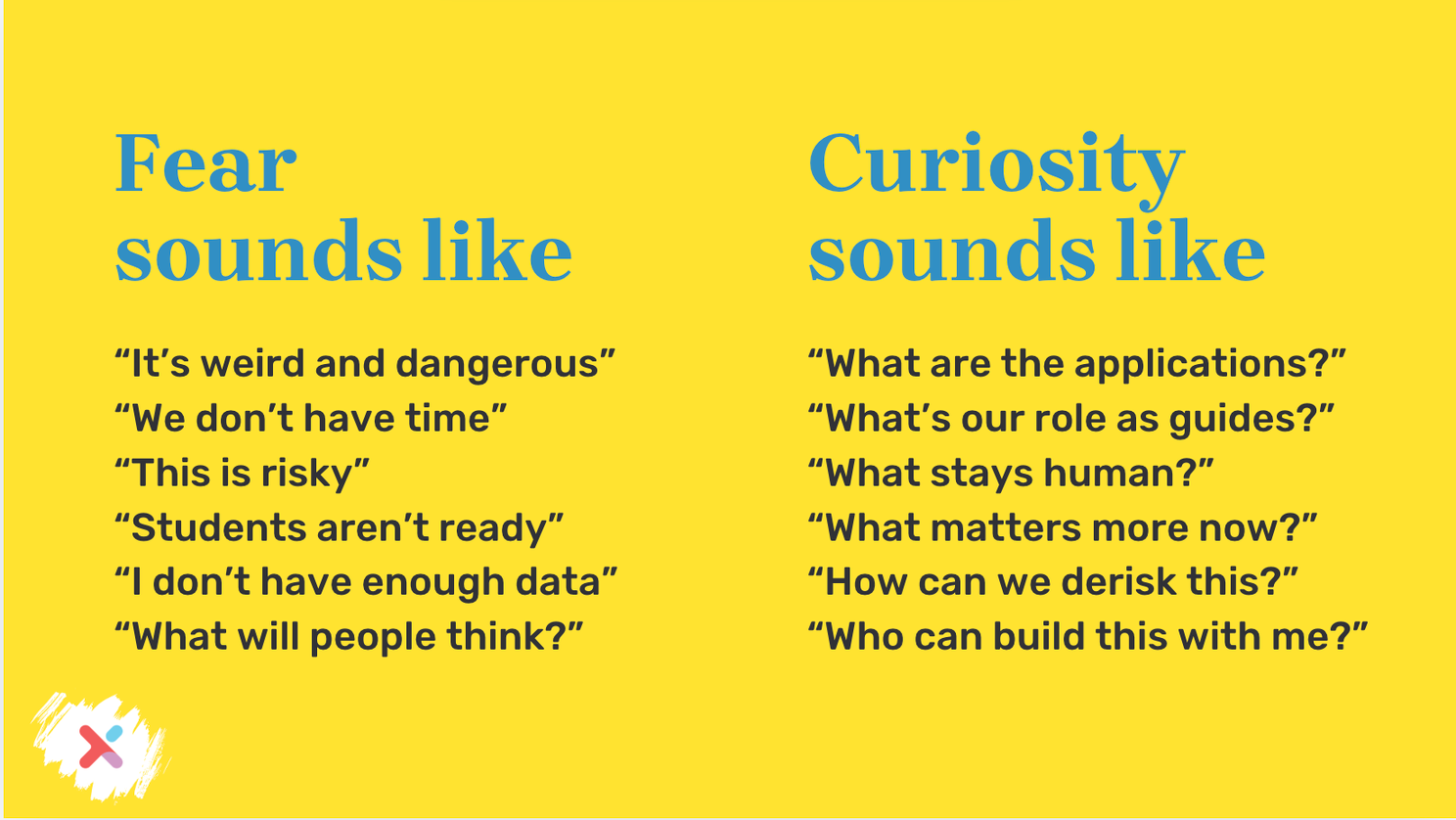
We also explored how the opposite of curiosity is fear – the instinct that shuts down exploration, narrows thinking, and freezes potential.
We feel fear when new technologies or cultural norms threaten tried-and-tested processes (hello, remote work). We feel it during restructures and leadership changes (hello, every organisation ever). We feel it when familiar language and systems stop feeling solid (hello, AI...).
Put simply: Fear narrows options. Curiosity multiplies them.
And instead of defaulting to fear, this group chose curiosity.
Making a commitment to curiosity
Across the room, staff reflected and shared what curiosity could look like in practice – especially in a school where excellence already runs deep.
Some of the commitments included:
- Long-standing staff – including those with 20+ years at the school – challenging themselves to find new ways of thinking, even when old ones have worked well
- Replacing “but” with “and…” as a simple way to stay open and signal curiosity
- Collaborating more deliberately with colleagues in different parts of the school, not just familiar teams
- Making learning visible by showing students that adults are still learning too
- Becoming more comfortable with making and breaking – and exploring what “agile” could mean in a school context, borrowed thoughtfully from software development rather than feared
These shifts require trust, permission, leadership, and support for one another.
Curiosity as a survival tool – and now a choice
Curiosity has shaped my own life more than any formal plan ever did.
Over my primary and secondary education, I attended seven different schools across different countries and systems. I was often the new student – learning unspoken rules, working out how things were done, and finding my place.
Curiosity wasn’t optional. It was how I survived, connected, and learned.
That experience underpins the work we do at HEX. Curiosity isn’t about novelty or disruption for its own sake. It’s about staying open – to people, to change, and to what might be possible next.
I think curiosity drives value in three important ways:
- Curiosity about others → deeper engagement, empathy and stronger community. Essential in a world fragmented by politics, culture, lifestyles and believe systems.
- Curiosity about the world → future-ready learning and meaningful action. This helps us uncover what the world needs from us, and how we can make choices that make the world a better place.
- Curiosity about ourselves → sustainable leadership and unlocked potential. Reflection, meditation, coaching, journaling, visioning – all practices which help us become the leaders we are supposed to be.
This is eXQ in action – not just preparing students for exams or getting a better job, but forming people who can navigate complexity with confidence and care.
The future is exponential. Let's get curious about it.
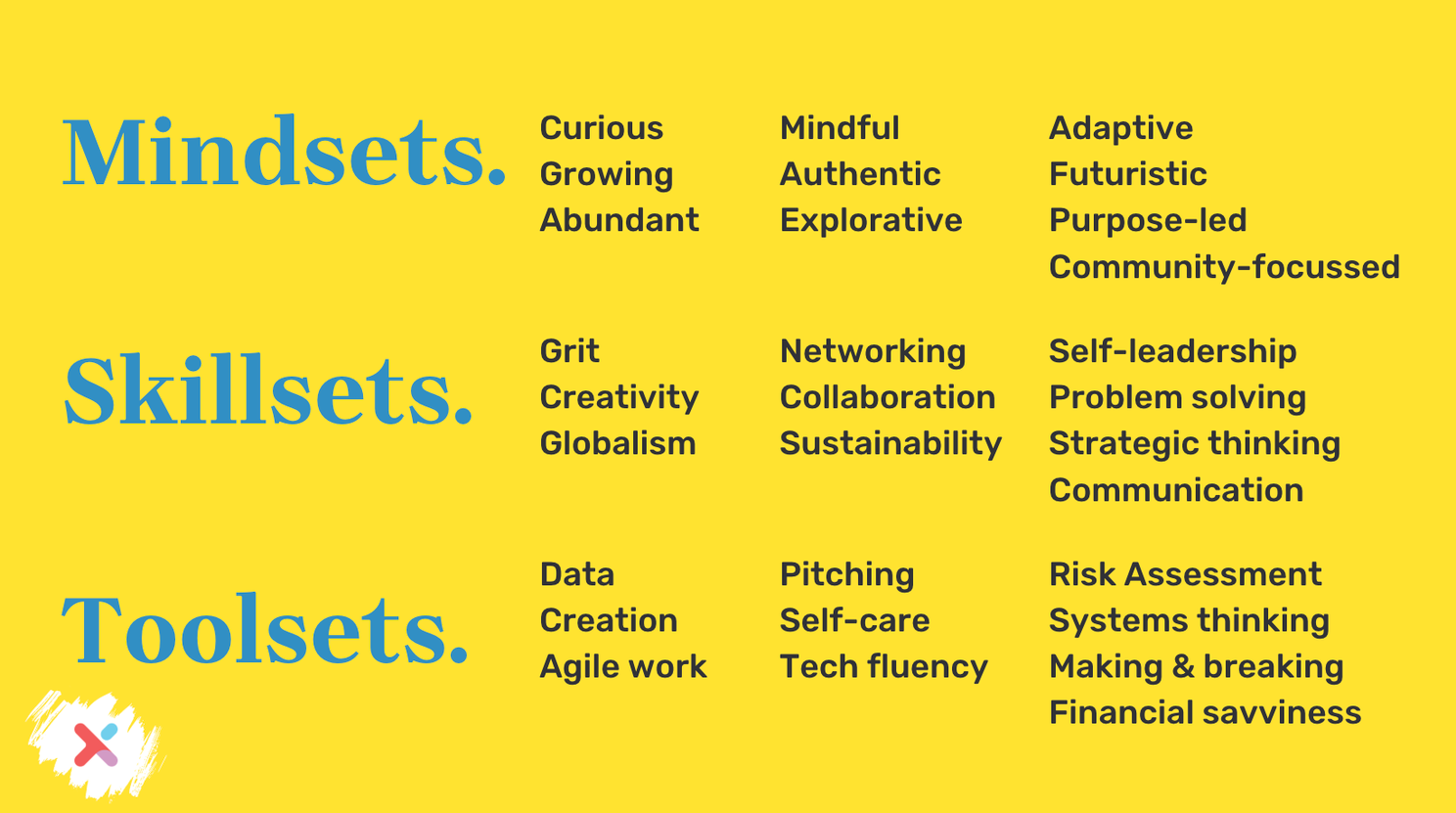
At HEX, we’re already working with education leaders across Australia, Singapore, Thailand, Vietnam, Australia, the Pacific, and India, helping schools and systems build the mindsets, skillsets, and toolsets their teams and students will need for 2026 and beyond.
If you’re an education or economic policy leader thinking about how to set your staff and students up for what’s ahead, I'd love to explore that with you.
Because the future of education and the institutions that will thrive won’t be shaped by certainty – they will be shaped by people brave enough to keep asking better questions.
Source: LinkedIn Pulse – What 300 Educators Decided to Do in 2026 – In the First Week of School

.png)


